









Looking Down vs Looking Ahead: AR Glasses vs Motorcycle Phone Mount

Looking Down vs Looking Ahead: AR Glasses vs Motorcycle Phone Mount

AR Glasses vs Motorcycle Phone Mount

You’re flying down an unfamiliar highway at 70 mph. Your GPS announces “turn in 500 feet,” but which exit? You glance down at your phone. Just two seconds. Traffic ahead brakes hard. Your heart jumps as you brake hard.

We’ve all been there.

For years, riders have accepted a bad compromise—mount your phone and live with the danger, or go old-school with audio-only and miss half your turns.

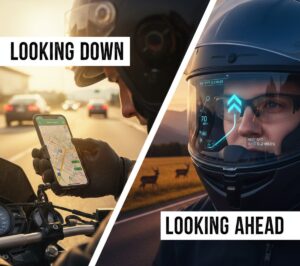
But AR glasses are changing the game. Navigation floating right in your field of vision. No looking down. No squinting at screens.

Keeping your eyes up while still knowing where you’re going.

The real question isn’t whether they’re cool. It’s whether they actually work when you’re two-up on a twisty mountain road with the sun setting and deer season in full swing.

Let’s find out.

What’s Traditionally Happening
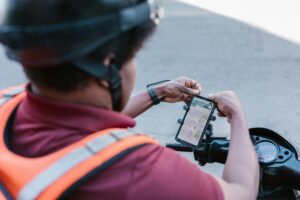
phone mount

Most of us know the drill. RAM mount. QuadLock. Some hefty bracket clamped to your handlebars. Phone goes in, Google Maps fires up, and off you go.

We use them for everything: navigation through unfamiliar towns, music control via Bluetooth helmet speakers, tracking rides to share with buddies, and pretending we’ll answer that call from work (we won’t).

The appeal is simple—you already own the phone. Mounts run $50-150. The screen is bright and big enough to actually see.

For a long time, it’s been “good enough.”

Until it isn’t.

Augmented Reality Glasses for Motorcyclists – What’s the Big Deal?

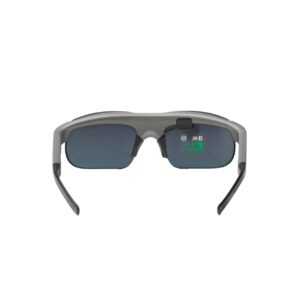
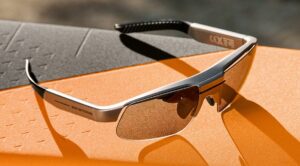
BMW ConnectedRide Smartglasses

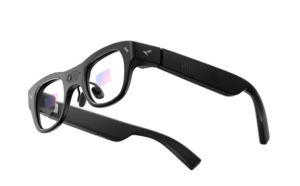
Motorcycle AR glasses put information directly in your line of sight. Think fighter pilot helmet displays, but for finding the nearest taco shop.

The information appears to float in front of you at “infinity focus”—the same distance as the road ahead. Your eyes never have to move or refocus.

What shows up? Just the essentials:

  • Navigation arrows pointing where to turn
  • Your current speed and the speed limit
  • Gear indicator (on compatible bikes)
  • Minimal call/text notifications
  • Critical bike warnings

The philosophy is brilliant: show only what matters, when it matters, without drowning you in information.

No glancing down. No refocusing. No guessing which exit while doing 80.

The Real Problems With Phone Motorbike Holder

phone holder

Phone mounts aren’t bad—but they’re not perfect either.

1. Looking Down Is Still Looking Away

Even a quick glance at your phone means your eyes aren’t on the road. In traffic or at speed, that’s risky.

2. Sun Glare Is a Pain

Bright sunlight can turn your navigation screen into a mirror. You end up tilting your head or guessing the next turn.

3. Rain, Heat & Dust Don’t Care About Your Phone

One bad rain ride or long hot day can be enough to kill a phone—or at least make you nervous the whole time.

4. Vibrations Are Real

Many riders have had phone cameras damaged from constant vibration, especially on rough roads.

Phones work—but they ask for more attention than we’d like to give while riding.

Check out Mistakes New Irish Riders Make (and How to Dodge Them)

How AR Glasses Actually Help on the Road - Glasses that are a Computer

BMW ConnectedRide Smartglasses

AR glasses fix nearly everything wrong with phone mounts.

  • Your eyes stay on the road. The display is already there. No head movement. No hunting for information. It just… appears.


  • No refocusing delay. Because the display uses infinity optics, your eyes stay focused on the distance. There’s no jarring transition from far to near and back. Your brain processes it instantly.


  • Zero vibration damage. Your phone lives safely in your pocket or tank bag. No destroyed cameras. No expensive repairs. No anxiety every time you hit rough pavement.


  • Actually visible in sunlight. AR displays are designed for bright conditions. Your phone screen becomes a mirror in direct sun. These don’t.


  • Weather-proof. Rain, spray, road debris—none of it touches the display or your phone.


  • Less mental load. A small, focused display showing only what you need creates far less distraction than a full smartphone screen with maps, notifications, and a dozen competing elements.

Challenges & Limitations of AR Glasses - Heads up Display

Before you start shopping, let’s get real about the problems.

The Market Is Tiny

Your options right now:

  • BMW ConnectedRide Smartglasses (~$750) – Mostly for BMW bikes
  • Blucap Moto – Limited availability, newer brand
  • Consumer AR glasses – Not built for motorcycles, don’t bother

Don’t ride a BMW? Your choices just got very slim.

They’re Expensive

$700-900 versus $50-150 for a phone mount. That’s a significant chunk of your riding budget. Maybe that’s money better spent on better tires or that weekend trip you’ve been planning.

Battery Life Isn’t Infinite

Six to ten hours typically. Fine for day rides. Problematic for 12-hour touring days or multi-day adventures where charging isn’t guaranteed.

Setup Is Complicated

You’ll need to pair with your phone, configure apps, learn the interface, make sure your helmet fits comfortably with glasses, and keep software updated.

It’s not “mount and go” simple.

Prescription Glasses?

Most AR glasses don’t play nice with prescriptions. You might need contacts or custom solutions. More money. More hassle.

You Still Need Your Phone

The irony: AR glasses don’t replace your phone. They need it for GPS, connectivity, and processing power. Your phone must be charged, paired, and running the companion app.

You’re adding technology, not replacing it.

Real-World Riding Scenarios: Phone Holder vs AR Glasses

Urban Commuting (20–30 min daily)
Urban Commuting
  • Phone mount: Simple, familiar, gets the job done. Long-term vibration damage is the hidden risk.
  • AR glasses: Overkill for fixed routes, useful if you’re often exploring new areas.

Winner: Phone for routine commutes. AR if you navigate a lot.

Weekend Canyon / Twisties (3–5 hours)
Weekend Canyon
  • Phone mount: Dangerous to glance at mid-corner. Sun glare hits at the worst times.
  • AR glasses: Huge advantage. Eyes-up navigation feels safer and more natural.

Winner: AR glasses, clearly.

Long-Distance Touring (6+ hours, multi-day)
Long-Distance Touring
  • Phone mount: Easy charging and large screen at stops, but vibration damage is almost guaranteed.
  • AR glasses: Battery management needed, but safety over long highway hours is a big plus.

Winner: AR glasses for riding, phone as backup.

Off-Road / Adventure Riding
  • Phone mount: Usually doesn’t survive.
  • AR glasses: Better protected, but battery and ruggedness are concerns.

Winner: Neither. Dedicated motorcycle GPS still rules.

Group Rides
Group Rides
  • Phone mount: Works fine when following others.
  • AR glasses: Minimal benefit unless leading complex routes.

Winner: Tie.

Next read our: Naked or Full-Fairing Motorcycles? What to Pick for Ireland’s Roads

Available Options Today - Augmented Reality

BMW ConnectedRide Smartglasses (~$750)

BMW ConnectedRide Smartglasses

BMW ConnectedRide Smartglasses (~$750)

Pros: Built for motorcycling, ~10-hour battery, clean HUD, excellent BMW integration
Cons: Expensive, BMW-centric, limited availability
Best for: BMW riders who want seamless, premium tech

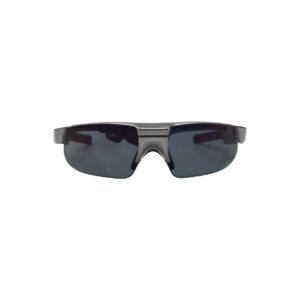
Blucap Moto

Blucap Moto

Blucap Moto

Pros: Designed for riding, universal approach, handlebar remote
Cons: Limited availability, fewer long-term reviews
Best for: Non-BMW riders open to emerging tech

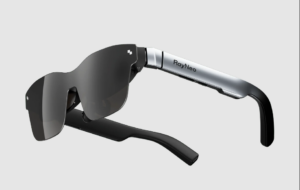
Consumer AR Glasses (XREAL, RayNeo, Rokid)

Consumer AR Glasses (XREAL, RayNeo, Rokid)

Pros: Cheaper, widely available
Cons: Not motorcycle-specific, poor sunlight performance, DIY setup required
Best for: Tinkerers—not serious riding use

Reality: AR for motorcycling is still early-stage. True plug-and-play is rare outside BMW.

Which Should You Choose?
Stick With a Phone Mount If:
  • You ride short, familiar routes
  • Budget matters
  • Your bike isn’t AR-compatible
  • You rarely need visual navigation

Smart setup: Quality vibration-dampened mount, large fonts, voice navigation, old phone if possible.

Upgrade to AR Glasses If:
  • Safety is your top priority
  • You often ride unfamiliar routes
  • You tour or ride long distances
  • You’ve had (or fear) phone camera damage
  • You’re okay being an early adopter

Important: Always keep your phone as backup.

The Hybrid Approach (Most Practical)
  • AR glasses while riding
  • Phone stored safely for stops and emergencies

Best balance of safety and reliability.

Safety Tips (No Matter What You Use)
Safety Tips

Always set your route before you start riding and rely on voice navigation whenever possible.

Never interact with devices while moving—pull over completely if adjustments are needed. 

Keep displays minimal so they don’t compete for attention, and test any new tech on familiar roads before trusting it on long or complex rides. 

Technology should support your riding, not distract from it.

Final Verdict – What Makes Sense Right Now
navigation

AR glasses are clearly the future—but in 2024–2025, they’re still premium, limited, and evolving.

  • BMW riders with the budget: AR glasses are genuinely excellent.
  • Everyone else: A high-quality phone mount used intelligently still makes sense.

What many experienced riders do is simple: invest in a proper phone setup now, ride smart with it, and watch AR technology mature over the next year or two. Prices will come down, compatibility will improve, and the experience will get smoother.

The worst option isn’t choosing phone or AR—it’s using cheap mounts and constantly checking your screen while riding.

However you navigate, the goal is the same: keep your eyes on the road and make it home safe.

Check our : How to Be a Defensive Rider on Irish Roads – Complete Safety Guide ,Top Motorcycle Clubs in Ireland and How to Join

Help fellow motorcyclists make the right choices. Share your opinions and experiences on various topics through our forum.

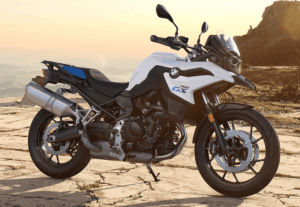
Suzuki GSX R125

Suzuki GSX R125

The Suzuki GSX-R125 is a lightweight, fully-faired sportbike offering nimble handling, aerodynamic styling, and a high power-to-weight ratio.
Read More »
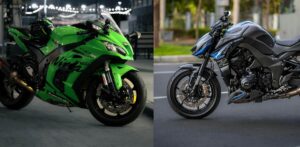
BMW gs 800

BMW F 800 GS – 2025

Powered by a parallel-twin engine producing 87 hp, it features modern electronics, TFT connectivity, and optional navigation prep—offering the perfect balance between performance and comfort.
Read More »

Some More Cool Projects

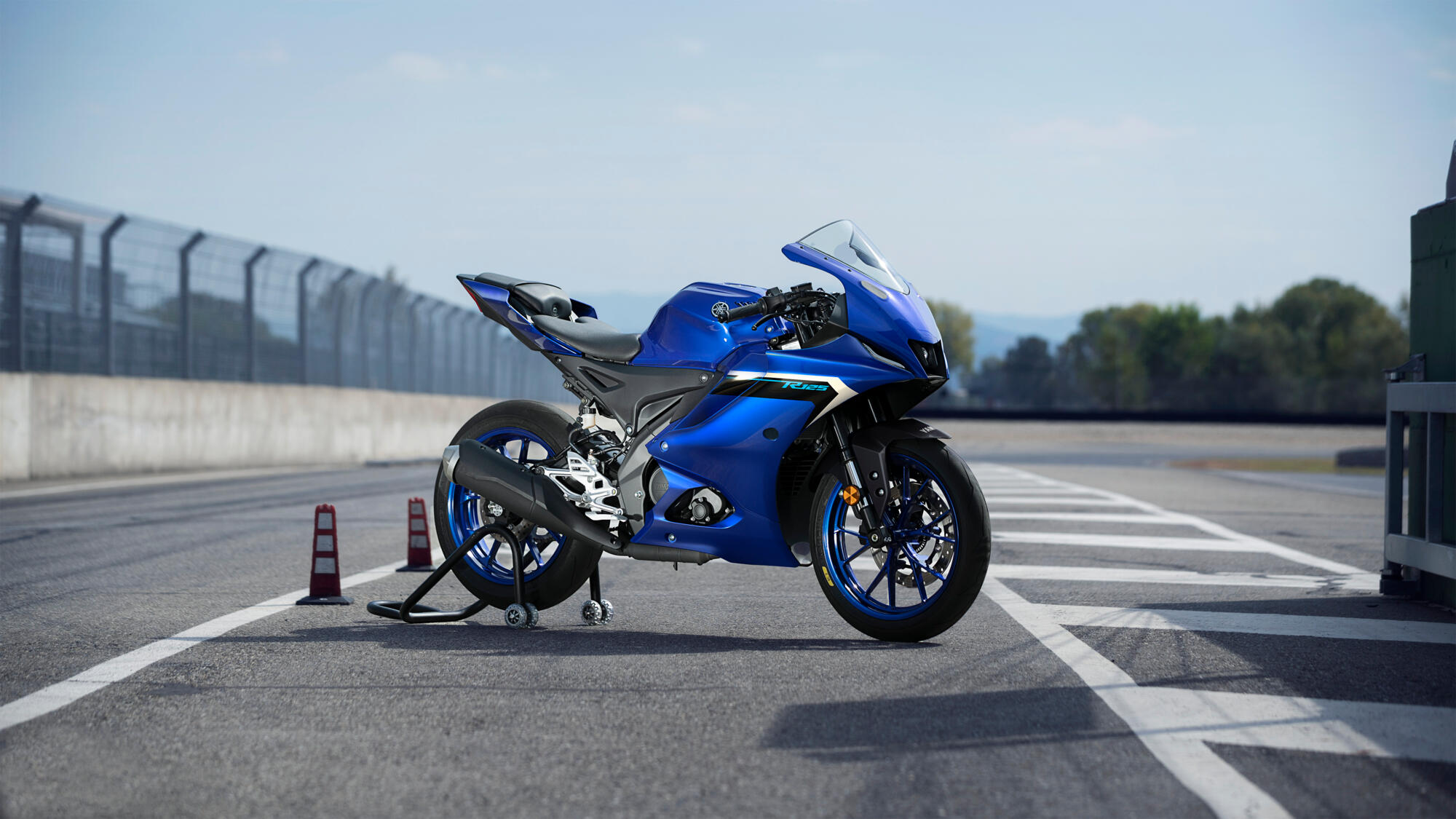
Yamaha YZF-R125

Yamaha YZF-R125 (2026)

The Yamaha YZF-R125 (2026) is Yamaha’s most advanced A1-licence supersport motorcycle, inspired directly by the R-series DNA of the R7 and R1.

Sign In

Register

Reset Password

Please enter your username or email address, you will receive a link to create a new password via email.

MeditateOn2Wheels
Privacy Overview

This website uses cookies so that we can provide you with the best user experience possible. Cookie information is stored in your browser and performs functions such as recognising you when you return to our website and helping our team to understand which sections of the website you find most interesting and useful.