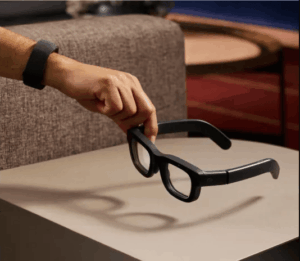
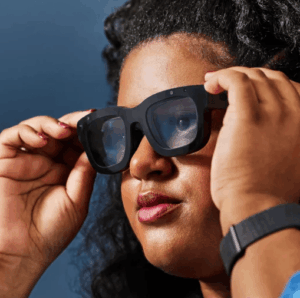
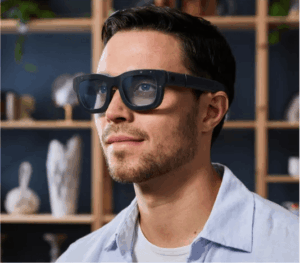

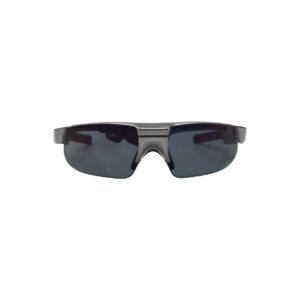

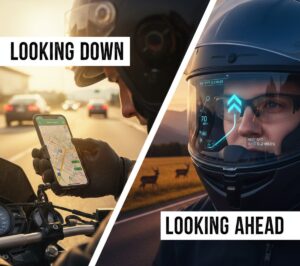
Finally, the future we've been waiting for is here - and it looks like a pair of augmented reality glasses powered by Meta’s AI.
Every time you glance down at your phone mounted on the handlebars, you’re playing Russian roulette with your life. At 60 mph, looking away for just two seconds means you’ve traveled 176 feet blind. That’s nearly two-thirds of a football field.
We’ve all been there. That death grip on the bars while squinting at Google Maps. The frantic head-bobbing between the road and your GPS. The anxiety of missing your exit because you couldn’t look down at the worst possible moment.
Current solutions? BMW’s ConnectedRide Smartglasses project info onto just one lens with a tiny viewing area. Smart helmets add weight and cost a fortune to replace. Blucap Moto offers basic navigation but little else. They’re all trying, but they’re not quite there.
Enter Meta’s Orion AR glasses. And holy hell, these might just be the most exciting thing to happen to motorcycling since ABS brakes.
Meet Orion: The Tech That Gets Riding
Meta’s Orion is still a prototype, not hitting stores until around 2027. But what it demonstrates is genuinely revolutionary for future technology, AI tech, and artificial reality.
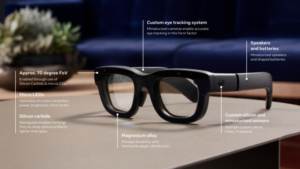
70 degrees of display real estate.
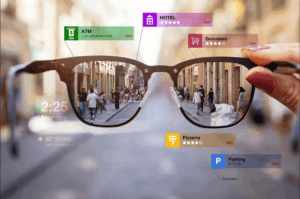
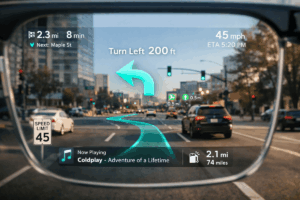
That’s 35–50% bigger than anything else out there. Information appears exactly where you’re already looking. Navigation arrows float right in front of you, and you never have to look away from the road. It’s like having a co-pilot who whispers directions directly into your field of vision — a true heads-up display for riders.
Silicon carbide lenses.
This ultra-high refractive index material bends light in ways that pack that huge field of view into actual glasses with frame.
No bulky headset. No cyberpunk dystopia vibes. Plus, microLED projectors punch through direct sunlight – because a display you can’t see in sunshine is useless.
98–100 grams.
That’s lighter than most sunglasses and many athletic glasses. You can wear these for hours without neck fatigue.
They fit under any helmet and don’t turn your head into a sauna thanks to the magnesium frame’s thermal dissipation. For long-distance riders, this changes everything.
The Features That Actually Matter
Control Without Letting Go
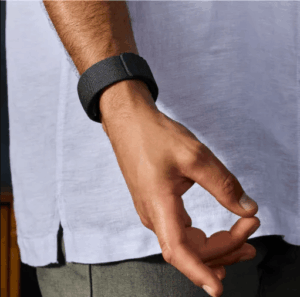
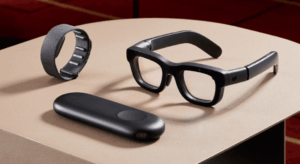
Voice commands handle navigation, calls, and information without touching a button. Eye tracking lets you select options by simply looking at them. But here’s the killer feature: the EMG wristband.
This thing reads electrical signals in your wrist muscles. You can control the interface with tiny finger movements – so subtle nobody notices while your hands stay on the handlebars. Even with gloves on. EVEN. WITH. GLOVES. ON.
You can adjust navigation, answer calls, or check information without gesticulating like you’re conducting an invisible orchestra. It’s control so seamless it feels like telepathy – a glimpse of the AI future in real riding conditions.
Source: Forbes
No Wires, No Weight
All processing happens in a pocket-sized wireless puck. No cables running from your helmet to your phone to your jacket. You move your head freely.
Battery life hits 2–3 hours, enough for most rides. And since the puck is in your pocket, you’re not wearing battery weight on your face – unlike many smart glasses or VR goggles.
Navigation That Makes Sense
Traditional GPS shows you a 2D map and expects your brain to translate that into “turn left at the big tree.” Your brain does overtime while you’re operating a motorcycle at speed.
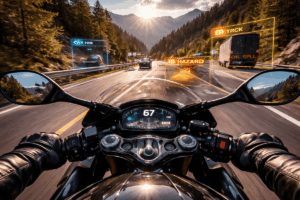
Orion shows you a glowing arrow pointing exactly where you need to turn. In the real world. Anchored to the actual street corner. You can have up to three information windows – navigation, speed, gear position. All stable even as your head bounces from road vibrations.
This is road navigation and motorcycle sat nav done right.
AI That Sees What You See
The Meta AI understands context. Ask, “How far to the next gas station?” and it knows where you are, where you’re going, and what’s around you.
“Show me coffee shops on my route.” Boom – overlaid on the real world.
“What’s that building?” Instant information.
Better yet: proactive warnings about road hazards, weather changes, or live traffic updates and current traffic updates based on what the AI observes.
It’s like having the world’s most attentive riding buddy – powered by AI and the future.
Connected Without Distraction
Video calls appear as a fixed window (when safely stopped or cruising). Text messages get voice replies only. Group rides get shared waypoints, coordinated routes, and instant communication, No fumbling with intercoms.
Who is the Competition
BMW ConnectedRide ($750–800): One lens, basic features, BMW-only compatibility.
Blucap Moto: Navigation focus, simpler tech.
Smart helmets: Model-specific, heavy, expensive to replace.
Orion: Any helmet. Zero head weight. No brand lock-in. Superior tech. A complete computer-using-glasses platform. It’s not even close.
The Safety That Matters
That 70-degree field of view keeps critical information in your natural scanning area. No looking down. No head bobbing. Just smooth, continuous road awareness.
Spatially anchored navigation eliminates mental translation. Your brain doesn’t work overtime. You react faster. You ride smarter.
Transparent lenses never block your view. The AI enhances what’s there. Display brightness auto-adjusts from bright sunlight to night riding. No glare, no squinting.
And your phone stays protected in your pocket, safe from vibrations that destroy cameras – unlike a motorcycle phone mount.
Where This Shines
City commuting: Traffic updates, complex intersection navigation, speed limits — without distraction in dense traffic.
Long tours: Monitor navigation, speed, gear, fuel simultaneously. All-day comfort. Perfect for 400-mile days.
Group rides: Coordinate effortlessly. See shared waypoints. Communicate without constant stops.
Performance riding: Real-time speed, gear, lean angle without looking down. Focus stays forward.
Adventure riding: Navigate unmarked trails. AI identifies terrain. Never get lost in backcountry.
The Tech and What's Next
Under the hood, processing lives in the wireless puck – desktop-class computing without face weight.
Custom silicon handles time-critical tracking with ultra-low latency, while multiple sensors (cameras, IMUs, eye tracking, hand tracking, EMG) provide redundant reliability. Display quality delivers high contrast, wide color, daylight-bright, nighttime-clear visuals.
Meta’s developer ecosystem opens doors to motorcycle-specific apps: maintenance reminders, riding analysis, route planning, community features – extending the future in tech and future with AI.
Future ECU integration could pull data directly from your bike. Shared experiences let riders mark locations, share routes, and provide real-time road updates.
Now for the practical stuff. Prescription lens integration is crucial – Meta’s partnering with EssilorLuxottica (Ray-Ban) to handle this for riders who need prescription glasses and eye glasses lenses.
Regulations vary by region, helmet compatibility needs verification across all styles, and battery solutions for ultra-long rides need work. These are solvable problems, not deal-breakers.
What It'll Cost You
Expected price: $1,000–1,500. That sounds steep until you compare it to high-end comms, GPS units, mobile cell phone holders, and phone mounts combined – plus not replacing vibration-damaged phones.
When you factor in the safety benefits and functionality, it’s actually competitive with piecing together multiple inferior solutions.
The Bottom Line
Meta’s Orion represents the future we’ve been begging for. No more choosing between safety and convenience. No jerry-rigged phone mounts. No squinting at tiny screens. No “just one quick glance” that becomes a near-miss.
Instead: seamless information, intuitive control, genuine intelligence, all-day comfort, and eyes on the road, always.
Yes, it’s still a prototype. Yes, the consumer version arrives around 2027. But the technology is real, demonstrated, and coming.
When these glasses finally launch, they’ll be as essential as a good helmet. They’ll change how we think about staying connected while staying safe. They’ll change what it means to ride.
And honestly? I can’t wait.
The future of motorcycling isn’t about choosing between the analog thrill and digital convenience. It’s about having both – seamlessly, safely, and in style.
See you on the road. With better vision than ever before.
Help fellow motorcyclists make the right choices. Share your opinions and experiences on various topics through our forum.
-
- Forum
- Topics
- Posts
- Last Post
-
- For Beginners
- 1
- 1
- No Topics
- General Discussions
- 0
- 0
-
No Topics
-

Increasing Motorcycle Accidents in Ireland: Reasons & Preventive Measures
The latest data from the Road Safety Authority (RSA) paints a sobering picture of motorcycle safety in Ireland. A total of 105 motorcyclists were killed on Irish roads in the last five years, with 884 serious injuries recorded over the same period from 2020-2024.
How to Be a Defensive Rider on Irish Roads – Complete Safety Guide 2025
assume the worst, prepare for anything, and always have an escape plan. This approach will keep you safe while still allowing you to enjoy some of the world’s most scenic riding routes.
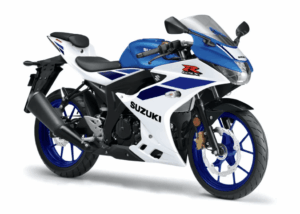
Suzuki GSX R125
The Suzuki GSX-R125 is a lightweight, fully-faired sportbike offering nimble handling, aerodynamic styling, and a high power-to-weight ratio.
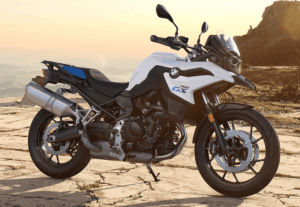
BMW F 800 GS – 2025
Powered by a parallel-twin engine producing 87 hp, it features modern electronics, TFT connectivity, and optional navigation prep—offering the perfect balance between performance and comfort.
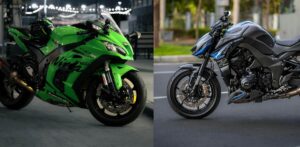
Naked or Full-Fairing Motorcycles? What to Pick for Ireland’s Roads
In this guide, we’ll dive deep into the naked versus full-fairing debate, specifically through the lens of Irish riding conditions. By the end, you’ll know exactly which style suits your riding ambitions on the Emerald Isle.

Outlaw Motorcycle Clubs in Ireland: Brotherhood, Bikes, and the 1% Life
When you think of outlaw motorcycle clubs, images of leather jackets, roaring V-twins, and a tight-knit brotherhood probably spring to mind. In Ireland, that world exists and it’s a mix of imported “1%” culture and home-grown biker tradition.